
Product guide
API pressure-retaining castings
In short
High-pressure retaining API components are castings that contain pressure in oil exploration and process equipment. H.J. MetalCraft casts them to customer drawings up to 180 kg in carbon, alloy, duplex and nickel-base alloys, with full mechanical testing and NDT.
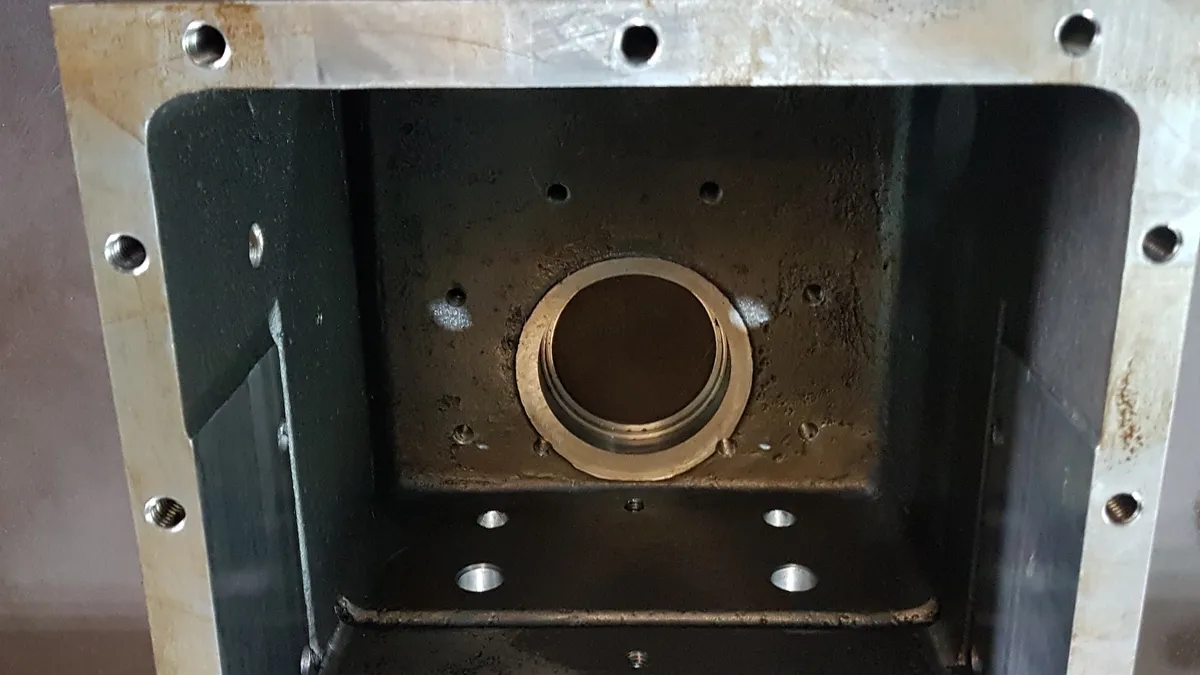
What makes a casting pressure-retaining?
A pressure-retaining part forms part of the boundary that holds fluid under pressure. If it fails, the equipment fails. These castings therefore need verified chemistry, proven mechanical properties after heat treatment, and volumetric inspection to show they are free of harmful defects.
How we make them
- Method and pattern: designed in our own pattern shop to feed heavy sections and keep the pressure boundary sound
- Melting: induction melting with spectrometer-verified chemistry
- Heat treatment: quench and temper or normalise and temper in gas-fired bogie furnaces, with a 14,000-litre agitated quench tank
- Mechanical testing: tensile, 0.1% / 0.2% proof stress and Brinell hardness
- NDT: ultrasonic and radiographic for internal soundness, magnetic particle and dye penetrant for surfaces
- Pressure testing: on our pressure testing pump
Typical materials
Most onshore pressure parts are carbon or low-alloy steel, quenched and tempered to the required strength. Duplex and nickel-base alloys are used where the medium is corrosive or sour. See the standards & grades guide for common designations.
What to send with your enquiry
Your drawing, material specification, required heat-treatment condition, mechanical properties, NDT method and acceptance levels, and any customer or API product specification that applies.
Frequently asked questions
What testing do API pressure-retaining castings receive?
Chemistry by spectrometer; tensile, proof stress and hardness testing; NDT by UT, RT, MT and PT as specified; and pressure testing if required.
Which materials are used for high-pressure oil and gas castings?
Usually quenched and tempered carbon or low-alloy steel, with duplex stainless or nickel-base alloys for corrosive or sour service.