
Product guide
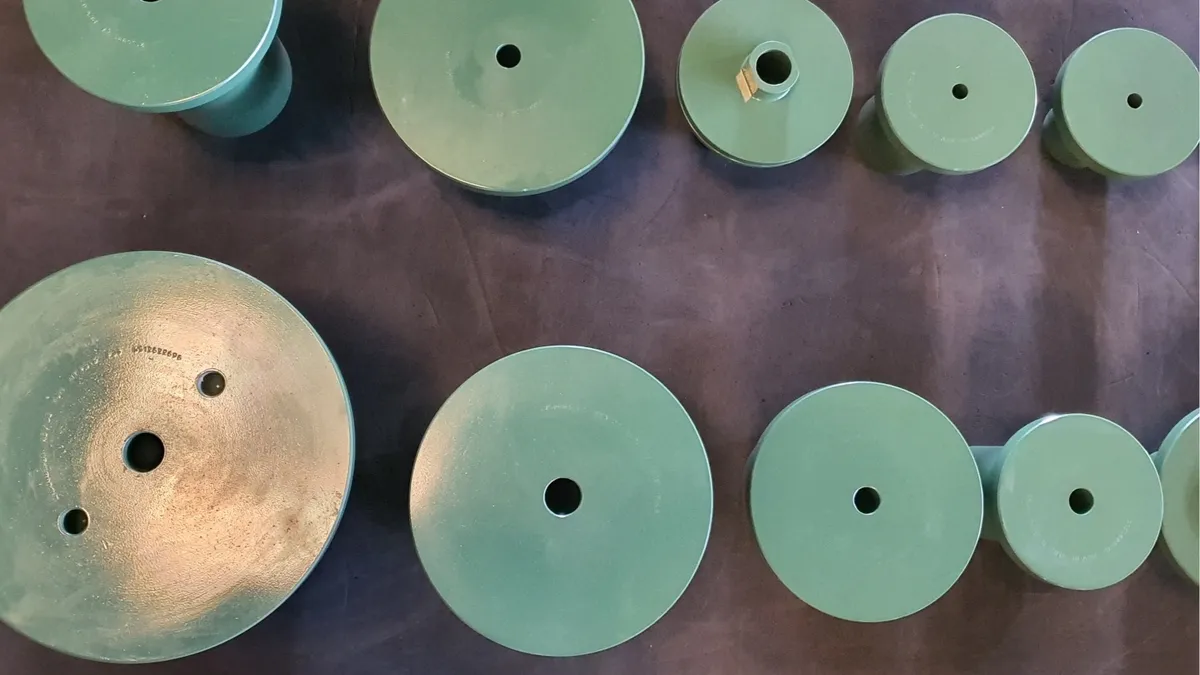
Corrosion-resistant coated castings
In short
H.J. MetalCraft supplies steel castings finished with paint or special coatings, including corrosion-resistant and autophoretic coatings, so carbon and alloy steel parts arrive protected and ready to install.
Why coat a steel casting?
Carbon and low-alloy steels are strong and economical but rust in moist or mildly corrosive environments. A good coating protects the part in storage, transit and service, often at far lower cost than moving to a stainless or nickel alloy.
Coating options
- Painted finishes to the customer's paint specification
- Corrosion-resistant coatings for parts exposed to moisture and process media
- Autophoretic coating: a water-based, dip-applied coating that deposits evenly on every wetted surface, including recesses and internal passages that spray can miss
Coating or alloy?
| Situation | Usual answer |
|---|---|
| Atmospheric exposure, storage and transit | Coated carbon steel |
| Mildly corrosive service, cost-sensitive | Coated carbon or alloy steel |
| Wetted parts in corrosive media | Stainless, duplex or nickel alloy |
| Hygienic or contamination-sensitive service | Stainless steel |
One order, finished part
We cast, heat-treat, machine and coat in one supply chain, so the part arrives ready to fit. Tell us the coating specification, thickness and any masking needed for machined faces or threads.
Frequently asked questions
What is autophoretic coating?
Autophoretic coating is a water-based coating applied by dipping. It chemically deposits on steel surfaces, giving even coverage including recesses and internal passages, with good corrosion resistance.
Can you supply castings machined and coated?
Yes. We supply castings finished, painted or with corrosion-resistant and autophoretic coatings, machined to drawing where needed.