
Process
Heat treatment of steel castings
As-cast steel is rarely in its best condition. Heat treatment turns a casting into a part with the strength, toughness and corrosion resistance its grade promises.
· H.J. MetalCraft technical team
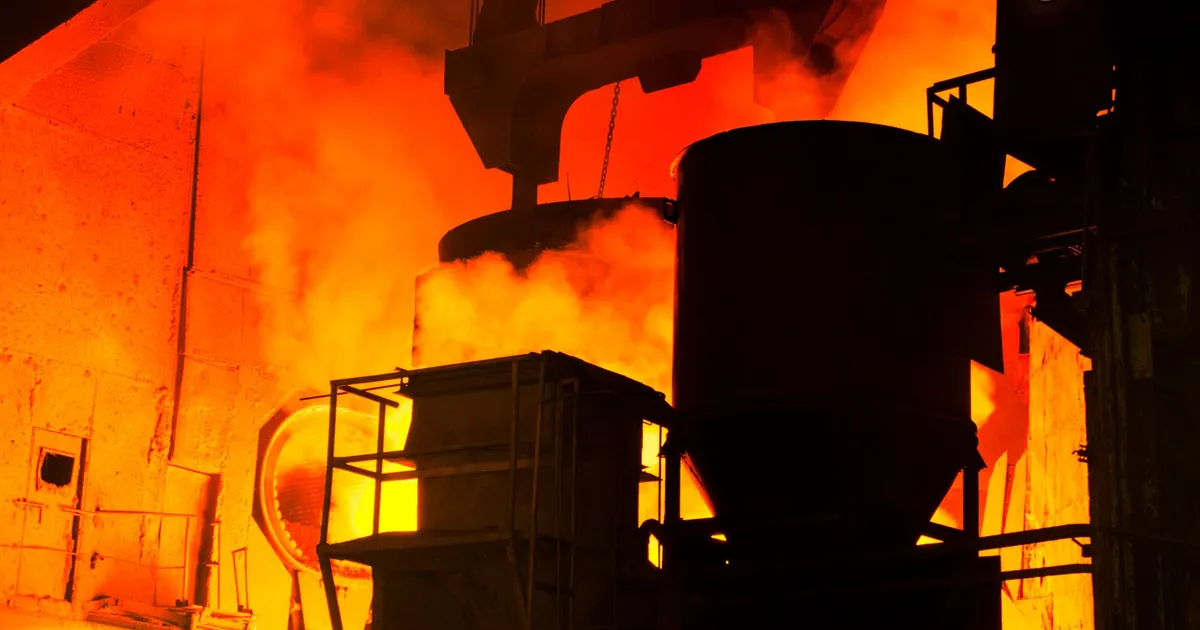
When steel solidifies in a mould it forms a coarse structure with internal stresses. Most casting specifications therefore require a heat treatment before the part is accepted. The right cycle depends on the alloy.
Annealing
The casting is heated above its critical temperature and cooled slowly in the furnace. Annealing softens the steel, relieves stress and improves machinability.
Normalising
The casting is heated above its critical temperature and cooled in still air. Normalising refines the coarse as-cast grain, giving a more uniform structure with better strength and toughness than annealing. It is often followed by tempering (normalise and temper).
Quenching and tempering
The casting is heated, then rapidly cooled in water or polymer to form a hard structure, then tempered at a lower temperature to restore toughness. Quench and temper gives the highest strength for carbon and low-alloy steels and is common for high-pressure and high-load parts.
Solution annealing (stainless, duplex, nickel)
Austenitic stainless, duplex and many nickel alloys are heated to a high temperature to dissolve carbides and unwanted phases, then rapidly water-quenched. This restores corrosion resistance and, for duplex, the right austenite-ferrite balance.
Summary
| Treatment | Main purpose | Typical alloys |
|---|---|---|
| Annealing | Soften, relieve stress | Carbon, alloy |
| Normalising (+ temper) | Refine grain, toughness | Carbon, Cr-Mo alloy |
| Quench & temper | Maximum strength with toughness | Carbon, low-alloy |
| Solution anneal + quench | Corrosion resistance, phase balance | Stainless, duplex, nickel |
Our heat-treatment shop
We run a gas-fired bogie furnace (1.0 t) for water quenching, normalising and annealing, a second bogie furnace with indirect flame for tempering, a 14,000-litre water quench tank with agitation for fast, even quenching, and a 1 MT overhead crane. Results are confirmed by tensile, proof-stress and hardness testing. See capabilities.
Have a casting in mind? Send us the drawing.
Request a quote